
 Join Discord
Rob Run Grow Table ESP for Grow Rooms and Base Raids
Your clan has gathered enough decoders for one raid this week, and from the street every plot in the settlement looks much the same. The base worth hitting is the one making money, and since Kefir raised farm payouts at launch, a grow room is one of the clearest signs of it. Rob Run grow table ESP marks grow tables on your screen, so you can see which bases are farming before you spend a single decoder. In this Surch Cheats guide we explain where the feature sits in Rob Run Inferno and how it plays into raids and the weekly wipe. We also cover where Kefir’s limits stop it.
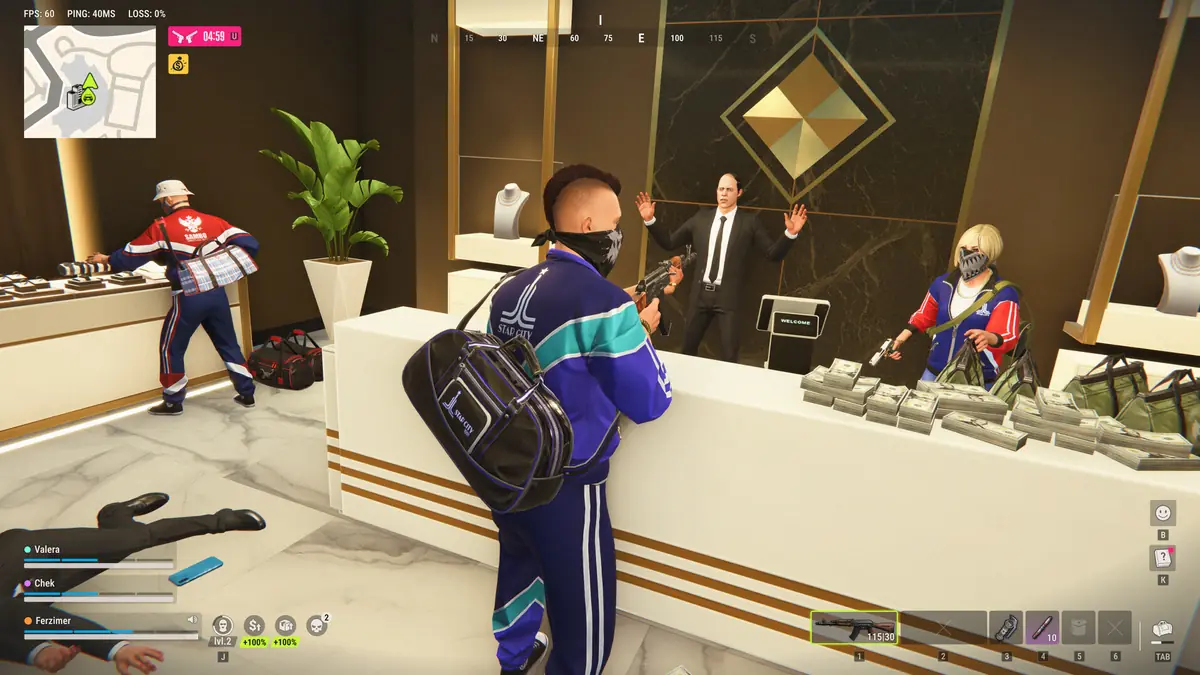
Where grow table ESP sits in Rob Run Inferno
Grow table ESP is one entry in the Workbench ESP group, the part of Rob Run Inferno that deals with what players run inside their bases. Its neighbours include laundering desk ESP, crypto farm ESP and production ESP, alongside the general workbench markers. The group shares individual workbench filters, custom workbench colours, a workbench distance display and its own render distance. That lets you show grow tables on their own or with the rest of a base, in a colour that won’t get lost among the others. Our Rob Run workbench ESP guide covers the whole group in detail.
The feature list names it and says nothing more, so we read it plainly. It marks grow tables. The same group lists workbench status, timers and contents, but nothing says those apply here, so we won’t promise you’ll see what’s growing or how long a harvest has left.
What goes into a Rob Run grow room
Kefir’s base announcement in October said bushes can be grown at your farm. The launch changes on 4 November then made farms, labs and contraband pay far more than before, which puts a grow room among the businesses worth guarding and worth finding. A third-party guide from 11 November describes the room as a grow table supported by a fan, a water pump and a UV lamp, with the harvest sold to a fence.
A community wiki that reads the game files adds rough prices as of 11 November. It lists about $100,000 for the grow room, $40,000 per grow table and around $485,000 for the full set. Treat those as community figures in an Early Access game whose payouts Kefir already reworked on launch day. For a raider the takeaway is simpler. Whoever runs a fully equipped Rob Run grow room has sunk a big share of their week’s money into it.
Picking a raid target with Rob Run grow table ESP
Raids cost you before they pay. Kefir’s help centre says you get into a rival base by using a decoder on its Security System, and that the owner can repair the system and lock you out again. Decoders aren’t sold in shops, so each one you spend on a base with nothing worth taking is simply gone.
Rob Run grow table ESP helps you choose. Pass a row of plots and the grow tables show up as markers, which tells you which bases are farming and roughly how big each operation is. Kefir has also said there’s no offline raid protection beyond the defences an owner fits, so a farm whose owner has logged off is still there to find. You’ll still have to get through those defences. The markers just tell you where your decoders are best spent.
When your own Rob Run base runs a grow room
The feature cuts both ways. If you run one yourself, assume another cheater can mark your tables just as easily. Kefir’s advice for protecting a base is to add fuses to the Security System, which makes a hack cost raiders more time and resources, and to fit defence modules that alert your allies. A well defended room is still visible, but it’s a much harder sell to a crew counting decoders.
Bases sit only in settlements that have an owner, and Kefir lets you move a base with all its contents whenever you like. If yours keeps drawing raids, moving it is a real option, though the new plot will show up on the same markers once you set up again.
Grow table ESP across a Rob Run wipe
Every seven days Kefir wipes plots, bases, weapons and cash and converts them into jail time and authority, so a grow room is a weekly investment that starts from nothing each cycle. Community guides note that each server wipes seven days after it opened, which means wipe day depends on your server rather than the calendar.
That shapes what Rob Run grow table ESP shows. On a fresh server you’d expect few grow tables, because few players can afford a full room in the first days. Later in the cycle more bases will be farming and the markers become far more useful for choosing a target. Remember that whatever you take is wiped along with everything else when the server resets.
What Rob Run grow table ESP won’t show
Kefir’s statement of 9 November 2026 lists what its servers stop cheats doing, and two items matter here. According to the developer, cheats can’t see inside unlooted containers or breach other players’ property. Rob Run grow table ESP marks where the tables are. It doesn’t open a base, read what’s stored there or get you past a Security System, and we at Surch Cheats make no claim that it does.
The same statement says the information sent to each client is restricted. Expect markers for the bases around you, not a register of every farm on the server.
Grow table ESP and a permanent Rob Run ban
Marking a grow table is as much cheating as locking an aimbot onto a player. Rob Run uses Easy Anti-Cheat, and Kefir has a dedicated anti-cheat team that buys popular cheats to test its detection. The developer’s stated penalty for cheating is a permanent ban. At Surch Cheats we don’t sell any feature as lower risk than another.
Grow table ESP comes with Rob Run Inferno, the cheat behind our Rob Run cheats category, and our Rob Run crypto farm ESP guide covers the next marker in the same group. Check the rest of the workbench group on the Rob Run Inferno page before you plan a raid around it.